

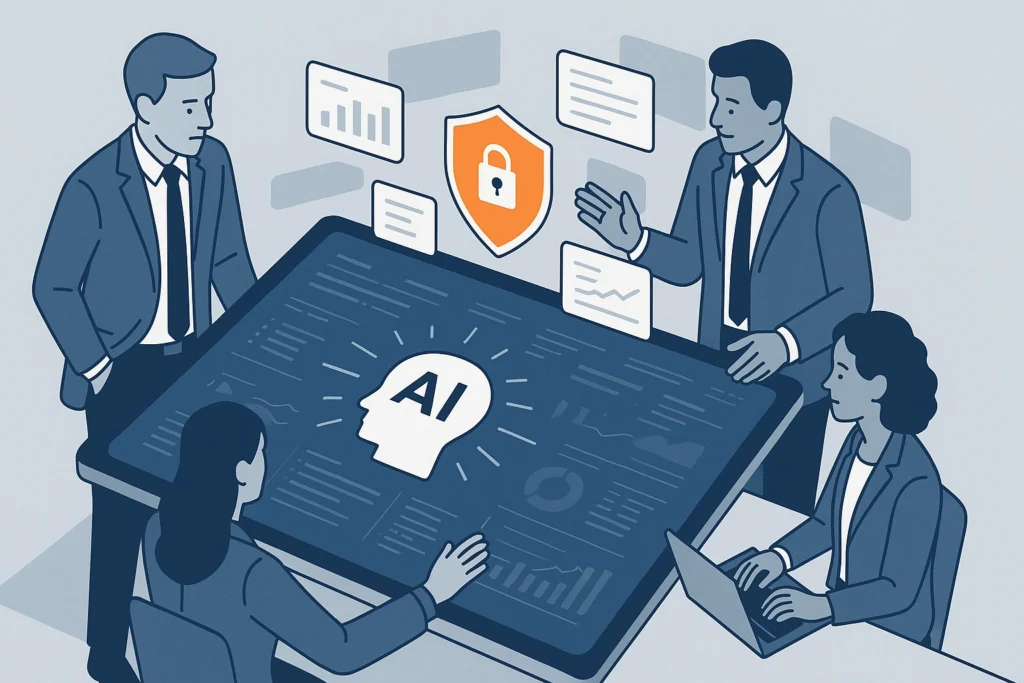
AI is redefining the speed, scale, and stealth of cyber operations. Security teams ingest more telemetry than ever, yet attackers iterate faster with synthetic phishing, polymorphic malware, and automated exploit discovery. In this arms race, the center of gravity shifts to models, data pipelines, and feedback loops, not just signatures and rules.
This analysis maps how AI accelerates the evolution of cyber secure technologies across threat detection and response, identity and access management, vulnerability management, data protection and cryptography, application security, and zero trust controls. We will examine practical techniques, transformer based anomaly detection, graph learning for lateral movement, and reinforcement learning for autonomous containment, along with the real limits, data quality, drift, adversarial manipulation, and privacy constraints. You will learn architectural patterns for integrating models with SIEM, EDR, and SOAR, evaluation metrics that matter, precision, recall, MTTD, MTTR, and strategies for governance, explainability, and human in the loop oversight. By the end, you will be equipped to separate signal from hype, prioritize investments, and operationalize AI safely within your existing stack.
Current State of Cybersecurity
An evolving, AI-accelerated threat landscape
Adversaries now weaponize AI to automate reconnaissance, exploit chain building, and multi-channel phishing at scale. Research documents AI agents generating thousands of tailored lures per second and pushing ransomware to many endpoints within minutes, see AI orchestrated threat landscape in 2026. Defenders are responding with machine learning and SOC automation, and 77 percent of firms use AI in security, 52 percent for phishing detection, 46 percent for intrusion detection, 43 percent for automating operations, per businesses taking action on AI security risks. Zero Trust, a pillar of cyber secure technologies, is advancing, replacing static rules with contextual, risk adaptive decisions that score identity and device posture in real time, per AI driven Zero Trust and digital trust trends.
Rising threat pressure and the case for robust defenses
Mid sized enterprises are 260 percent more likely to be targeted and account for 43 percent of incidents, compressing detection windows and raising recovery cost. With nearly 70 percent expecting a phishing incident in 2026, enforce universal MFA with phishing resistant authenticators, conditional access, and least privilege. Counter ransomware with immutable, segmented backups, tested restoration SLAs, and lateral movement controls, and instrument continuous monitoring tied to playbooks. Patch internet facing assets within days, automate asset discovery and software inventory, and retire end of life edge devices that no longer receive updates to remove systemic risk.
Geopolitical fragmentation and cyber risk
Geopolitical fragmentation, including sanctions, export controls, and data sovereignty rules, is reshaping supply chains and threat models for mid market organizations. Although the share of firms altering strategy due to geopolitics fell from 93 percent in 2023 to 66 percent in 2026, it remains the top driver of mitigation choices. Operationalize this with supplier tiering and SBOM requirements, region aware failover, geofencing of high risk traffic, and localization aware logging and retention. Prepare for harvest now, decrypt later risk by inventorying cryptography, enabling crypto agility, and piloting post quantum algorithms, while aligning threat intelligence to state linked actors.
The Impact of AI on Cybersecurity
AI’s dual role
Mid-market organizations face asymmetric pressure, with 43% of attacks targeting small and mid-sized businesses and a 260% higher likelihood of being hit than large enterprises. AI strengthens defenders by correlating telemetry across endpoints, identities, and cloud services in near real time, but it also empowers adversaries to industrialize reconnaissance, polymorphic malware, and impersonation. Automated scans approach 36,000 per second and deepfakes erode user trust, while 63% of security professionals rank AI social engineering a top 2026 challenge. Analysts expect a shift toward autonomous attack agents, echoing predictions on AI’s cybersecurity impact and recent work on adversarial machine learning risks.
AI-driven detection and mitigation
Defenses are maturing: behavioral endpoint analytics flag process lineage outliers, unsupervised network models isolate C2 beacons, and LLM classifiers score intent to blunt email compromise using AI-powered cyber secure technologies. SOC automation can enrich alerts with asset and identity context, summarize evidence, and orchestrate containment, which helps lean teams compress investigation time. For mid-market programs, pair these capabilities with MFA, disciplined patching, and pervasive encryption to reduce baseline risk and alert noise. When assessing tools, prioritize explainable detections, drift and false positive monitoring, and automated rollback or isolation, and consult curated overviews of AI-powered defense platforms to map features to your use cases.
New risks and how to manage them
AI expands the attack surface through data poisoning, model evasion, prompt injection, model theft, and output manipulation that can degrade classifiers and bypass controls. Mitigations include dataset provenance and hashing, input validation and content moderation, adversarial and red team testing, and runtime guardrails that restrict tools and data egress. Operationalize this with an AI risk register, versioned models and training data, per-request logging, and incident response playbooks covering model rollback, access key rotation, and user notification. Integrate AI governance with change control and third party model reviews, then rehearse deepfake enabled fraud scenarios with finance and HR to keep controls aligned with a rapidly evolving threat model.
Unique Cybersecurity Challenges for Mid-Market Firms
Specific vulnerabilities in the mid-market
Mid-market environments concentrate risk in ways that differ from large enterprises, creating distinct exposure patterns across identity, endpoints, and suppliers. Resource constraints often cap security headcount and tooling coverage, and market research indicating budget constraints shows many SMBs underfund core controls, which weakens baseline hygiene. Dependence on managed service providers and niche SaaS introduces concentrated third-party risk, with statistics on third-party breaches indicating a significant share of incidents originate in the supply chain. Human factors remain a primary threat vector, as shown by financial-sector phishing rates that illustrate how credential theft and business email compromise cascade into lateral movement and fraud. The threat landscape is also shifting toward AI-enabled reconnaissance and malware generation, which increases attack velocity and reduces dwell-time for defenders to detect early indicators.
Why tailored controls are necessary
Mid-market firms benefit from right-sized architectures that prioritize high ROI controls and operational simplicity. Identity-first defenses should combine multi-factor authentication, conditional access, and least privilege with continuous device posture checks. Cyber secure technologies such as automated patch management, endpoint detection and response, and encryption at rest and in transit reduce exploitability and blast radius with minimal staffing overhead. Zero Trust principles, microsegmentation, and explicit third-party access governance help contain supply-chain exposure while quarterly vendor risk reviews keep assurances current. Teams should codify incident response, integrate SOC automation for alert triage, and establish AI governance to manage shadow AI usage, model access, and data leakage risks.
Financial and reputational exposure
For mid-market organizations, breach costs are material to annual EBITDA, with recent reporting placing the global average breach at approximately 4.45 million dollars and small-business incidents still commonly six figures. Direct losses are compounded by downtime, where many firms experience a full day or more of disruption, plus regulatory penalties, legal fees, and increased cyber insurance premiums. Reputational damage can outlast the technical incident, as customer trust and renewal rates decline sharply following disclosures. Practical mitigations include tested playbooks, 24×7 detection with clear mean-time-to-detect and mean-time-to-respond objectives, immutable backups with rapid recovery drills, and preapproved notification templates for stakeholders. Hecatelabs.io operationalizes these practices for mid-market realities, aligning investments to measurable risk reduction while preserving business agility.
Modern Proactive Cybersecurity Strategies
Proactive measures gaining traction
Modern defenders are prioritizing identity-centric and visibility-first controls that prevent, not just detect. Adopting a Zero Trust security model enforces continuous verification, least privilege, and micro-segmentation across hybrid environments, which materially reduces lateral movement and insider risk. Continuous Threat Exposure Management, formalized as CTEM, operationalizes risk-based remediation by mapping attack paths, validating exploitability, and sequencing fixes by blast radius rather than CVSS alone. A cybersecurity mesh architecture then unifies controls across distributed assets, enabling consistent policy and telemetry sharing even when tooling varies. Mid-market teams should institutionalize phishing-resistant MFA, patch SLAs tied to exploit availability, and encryption at rest and in transit for sensitive stores. Pair these with an exercised incident response playbook focused on ransomware containment, including immutable backups, privileged access lockouts, and staged recovery procedures.
Machine learning in preventative strategies
Machine learning is shifting prevention left by finding weak signals early and automating containment. UEBA baselines user and service behavior to spot credential misuse and session hijacking with fewer false positives than static rules. Adaptive multi-agent analytics can correlate domains, certificates, and hosting patterns to flag coordinated phishing infrastructure before payload delivery, cutting dwell time for business email compromise. Dynamically retrainable firewalls and anomaly models learn from evolving traffic, blocking novel command and control beacons or data egress patterns in near real time. To implement safely, establish curated telemetry pipelines, drift monitoring, adversarial model testing, and human-in-the-loop review for high-impact actions. Maintain AI governance to control shadow AI usage, document decision paths, and align automations with regulatory and cyber insurance disclosure requirements.
How HecateLabs.io supports mid-market firms
HecateLabs.io operationalizes these strategies for resource-constrained teams through 24×7 managed security, expert penetration testing, and realistic red team exercises that validate control efficacy against ransomware and fraud tactics. The service model emphasizes fixed-price remediation with continuous validation, so gaps found in testing are retested until closed, reducing residual risk from deferred fixes. Proprietary threat intelligence and tailored detections accelerate containment for identity, endpoint, and SaaS attack surfaces where mid-market exposure concentrates. A typical 90-day program includes MFA hardening with phishing-resistant factors, EDR uplift and telemetry normalization, a CTEM pilot for internet-facing assets, data encryption baselines, and IR tabletop exercises with ransomware restore tests. This approach addresses the skills gap while building measurable resilience that aligns to evolving insurance and regulatory expectations. With these cyber secure technologies and processes in place, organizations can shift from reactive firefighting to continuous risk reduction.
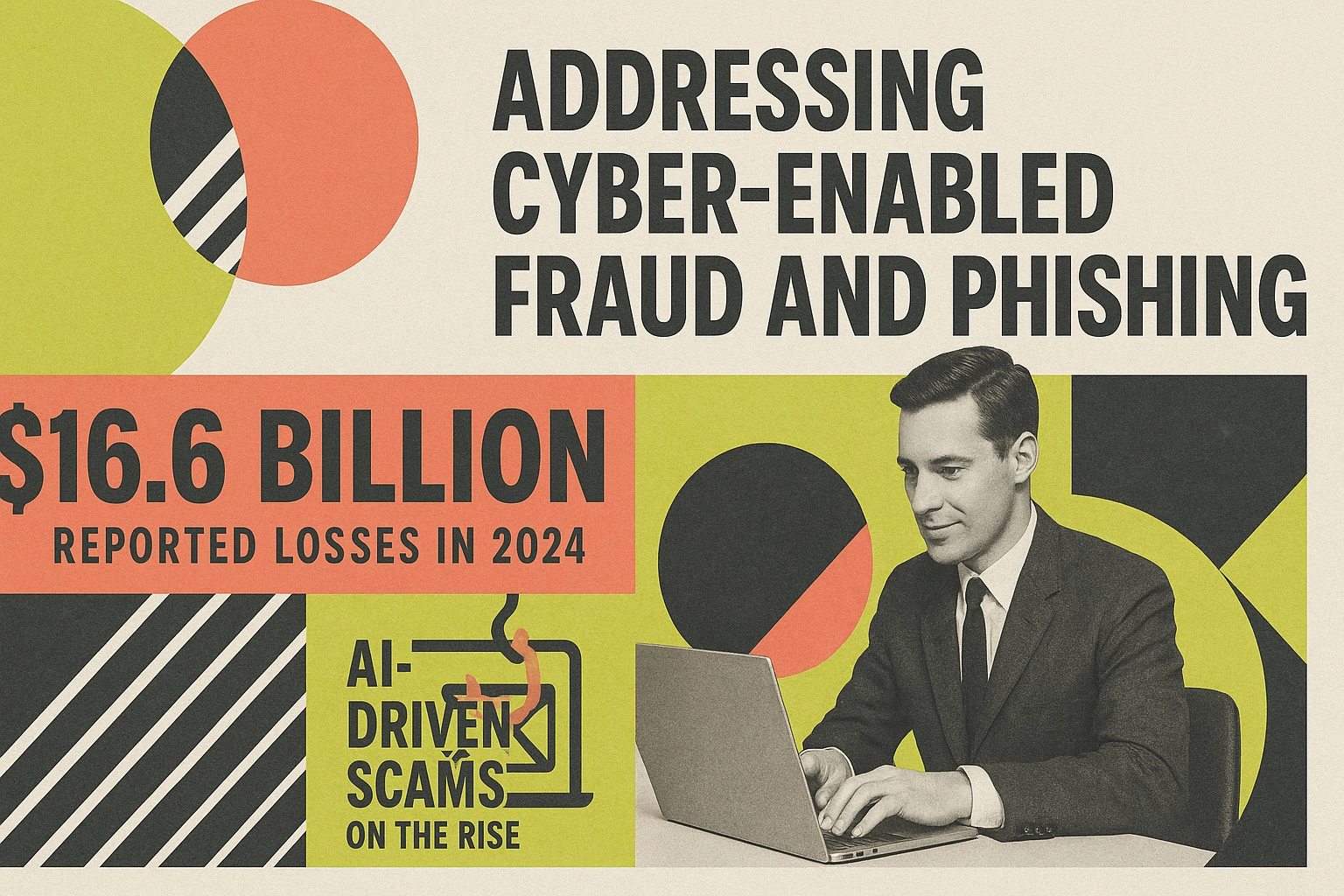
Addressing Cyber-Enabled Fraud and Phishing
The evolving fraud and social engineering landscape
Global cyber-enabled fraud has accelerated, with reported losses hitting 16.6 billion dollars in 2024, a 33 percent jump year over year. Attackers increasingly use AI to personalize lures and coordinate cross channel engagement, and 63 percent of security professionals now rate AI driven social engineering as a leading 2026 challenge. Deepfake abuse is rising as well, accounting for one in five biometric fraud attempts, with deepfaked selfies up 58 percent in 2025. Phishing remains the dominant entry path, driving 31 percent of initial compromises, with AI text in 82.6 percent of emails. Mid market teams face outsized exposure where consolidated duties, lean staffing, and third party dependence intersect with cyber secure technologies still maturing.
Technical controls to blunt phishing at scale
Start by enforcing DMARC, SPF, and DKIM with reject policies and inbound alignment checking to suppress spoofed domains and lookalike senders. Augment gateways with LLM based and graph based classifiers that evaluate intent, entity relationships, and linguistic anomalies, paired with computer vision to detect brand spoofing, QR phishing, and credential harvest kits. Use URL detonation and page similarity scoring before delivery, then time of click reinspection. Require adaptive MFA everywhere, prioritizing phishing resistant authenticators like FIDO2 passkeys, and apply conditional access with step up on risk. Automate containment via SOAR, including rapid token revocation, mailbox purge, and takedown requests.
Building resilient people and processes
Human factors drive approximately 74 percent of breaches, so education must be continuous and measurable. Run realistic simulations quarterly with tailored lures, which can cut susceptibility by about 30 percent, and maintain monthly microlearning. Programs sustained over six months have been shown to halve successful compromises. Add gamified leaderboards, in client banners, and one click reporting to reinforce habits. Rehearse executive impersonation and vendor change drills, and require out of band callbacks with codewords for approvals. Track click to report ratios, median time to purge malicious mail, and completion rates to validate control efficacy.
Navigating Supply Chain and Third-Party Risks
Third-party exposure and cascading risk
Mid-market organizations depend on cloud, logistics, and managed service vendors, expanding the attack surface at a time when they are 260 percent more likely to be targeted. In 2026, 28 percent of organizations reported incidents originating in third parties, rising to 37 percent in financial services; 16 percent of breaches involved AI driven supply chain attacks. Visibility is limited, with only 15 percent of CISOs claiming full insight into third-party posture. Prioritize a live vendor inventory mapped to data flows and criticality, SBOMs for suppliers that ship code, and explicit Nth-party mapping. Enforce least privilege with phish resistant MFA, just-in-time access, and segmentation, and embed breach notification windows, patch SLAs, and right-to-audit clauses in contracts.
Audits and continuous monitoring that validate controls
Point-in-time questionnaires are losing value, a view held by 71 percent of CISOs, so replace them with evidence based audits and automated control validation. Instrument vendor connections with continuous monitoring, including external attack surface discovery, certificate hygiene, configuration drift detection, and anomalous data egress alerts. Only 41 percent of organizations monitor beyond direct suppliers, yet impactful compromises often originate in Tier 2; expand oversight to salient Nth parties tied to regulated data or privileged paths. Operationalize with quarterly access recertifications for vendor accounts, private connectivity patterns, and pre-production security gates for supplier code. Run joint tabletop exercises and purple team scenarios, then feed findings into improved playbooks and cyber insurance attestations.
AI enabled defenses for supply chain security
AI is now central to cyber secure technologies across the supply chain. Seventy seven percent of companies use AI for security tasks, notably 52 percent for phishing detection and 46 percent for intrusion detection, and 66 percent are adopting AI driven assessment of third parties. Apply anomaly detection to vendor behavior baselines, for example unusual OAuth grants, off hours file sync spikes, or sudden code signing certificate changes, and automated containment such as session revocation. Agentic AI can summarize telemetry, correlate supplier advisories with SBOM components, and propose mitigations in about 3.83 minutes on average, shrinking time to triage. Pair these gains with governance, including model provenance checks, human in the loop approvals, and controls against shadow AI. Hecatelabs.io integrates these capabilities to help mid-market teams elevate visibility and convert third-party risk into measurable resilience.
Implications and Actionable Takeaways
Mid-market firms face asymmetric risk, with 43% of cyberattacks targeting mid-sized businesses and a 260% higher likelihood of being hit than large enterprises. AI-driven intrusion tooling is shifting to autonomous, reducing dwell time and accelerating phishing, initial access, and lateral movement. Ransomware and email compromise monetize quickly, while cyber-enabled fraud remains a top concern for organizations with insufficient resilience. A widening skills gap compounds exposure, and disclosure expectations in cyber insurance are tightening control baselines and incident reporting timelines. These trends imply that outcomes hinge on adopting cyber secure technologies for identity assurance, rapid patching, and resilient response capabilities, more than perimeter controls alone.
Prioritize identity-first controls: enforce phishing-resistant MFA for all users, require step-up verification for privileged actions, and implement least privilege with periodic access recertification. Institute a patch and configuration program with asset coverage tracking, target seven days for critical patches, and block known-bad exploits with virtual patching where needed. Encrypt data in transit and at rest using modern ciphers, test backup restores quarterly, and maintain 3-2-1 immutable copies to blunt ransomware. Operationalize detection and response with EDR visibility, automated containment, and a rehearsed incident response plan that defines communications, legal, and recovery playbooks. Confront AI-era risks by governing shadow AI usage, securing model inputs and outputs, and monitoring for AI-generated phishing indicators. Sustain vigilance through continuous vendor risk monitoring, quarterly tabletop exercises, and metrics such as MFA coverage, median patch latency, phishing click rate, and mean time to recover.
Conclusion
AI is reshaping cyber defense, changing speed, scale, and stealth on both sides. The edge goes to teams that move from static rules to models, data pipelines, and tight feedback loops. We mapped practical techniques, transformer based anomaly detection, graph learning for lateral movement, and reinforcement learning for autonomous containment, and we grounded them in hard limits, data quality, drift, adversarial manipulation, and privacy.
Your next steps are clear. Inventory telemetry and labels, pick two high impact use cases, stand up model operations, and integrate with SIEM, EDR, and SOAR. Set metrics that matter, precision, recall, MTTD, MTTR, and red team the models.
The value is a security program that learns, adapts, and scales. Start small, measure relentlessly, and ship improvements weekly. Build a learning defense that gets stronger with every incident.